
Ramadan Giving Guide for UK Muslims: Zakat, Zakat ul-Fitr, Fidya and Food Packs
By Sadaqah Welfare Trust · · 6 min read
Zakat, zakat ul-Fitr, fidya and kaffarah are easy to mix up. Here is what each one is, when it is due, and how to give well this Ramadan.
Why so much giving happens in Ramadan
Ramadan is the month of the Qur’an, of fasting and of generosity. The Prophet ﷺ was the most generous of people, and he was at his most generous in Ramadan (reported in Sahih al-Bukhari). Many Muslims choose this month to pay their zakat and give extra sadaqah, hoping for greater reward.
Ramadan also brings its own specific forms of giving, such as zakat ul-Fitr, fidya and kaffarah, which are easy to mix up. This guide explains each one, when it is due and what to ask before you give. For more on timing, see our article on the best time to give charity.
Zakat in Ramadan
Zakat is due once every lunar year on your own zakat date, which is not necessarily in Ramadan. Many people choose to set their zakat date in Ramadan so that it is easy to remember and falls in a blessed month. If you do, calculate on the same date each year.
Work out what you owe with our zakat calculator, which uses live gold and silver prices, and read our guide to comparing zakat calculators if you would like to double-check your figure. Before you give, ask the charity about its zakat policy.
Zakat ul-Fitr (fitrana)
Zakat ul-Fitr, also called fitrana or sadaqat al-fitr, is a small charity due at the end of Ramadan. It is paid by every Muslim who has the means, on behalf of themselves and their dependants, including children. It purifies the fasting person from idle talk and helps the poor to celebrate Eid.
When to pay and how much
Zakat ul-Fitr should be paid before the Eid prayer, and many charities ask you to give it in good time during Ramadan so that it can reach families before Eid. The amount is traditionally based on a measure of staple food, so UK charities publish a cash figure per person that can change from year to year. Check the current rate with the charity you are giving to.
Because zakat ul-Fitr is paid per person, a household pays it for each member, including young children. Many families find it easiest to pay for the whole household in one go, well before Eid, so that it is not forgotten in the busy final days of the month.
Fidya and kaffarah
These two are often confused, but they are for quite different situations.
Fidya
Fidya is paid by someone who cannot fast and is not expected to be able to make up the fasts later, for example because of old age or a long-term illness. For each fast missed, they feed a person in need or pay the cost of doing so. Charities publish a fidya rate per fast, which can change each year, so check the current figure.
Kaffarah
Kaffarah is the expiation for deliberately breaking a fast in Ramadan without a valid reason. The expiation is to fast sixty consecutive days or, if a person is genuinely unable to do so, to feed sixty people in need. Charities that collect kaffarah publish a rate, which also changes from year to year. Scholars differ on some details, so if you are unsure whether kaffarah applies to you, ask a scholar.
Ramadan food packs and appeals
Many UK Muslim charities run Ramadan appeals, including Islamic Relief, Muslim Hands, Penny Appeal and Human Appeal. We mention them for information only, and Sadaqah Welfare Trust has no connection with them; each charity’s appeal page explains what it funds.
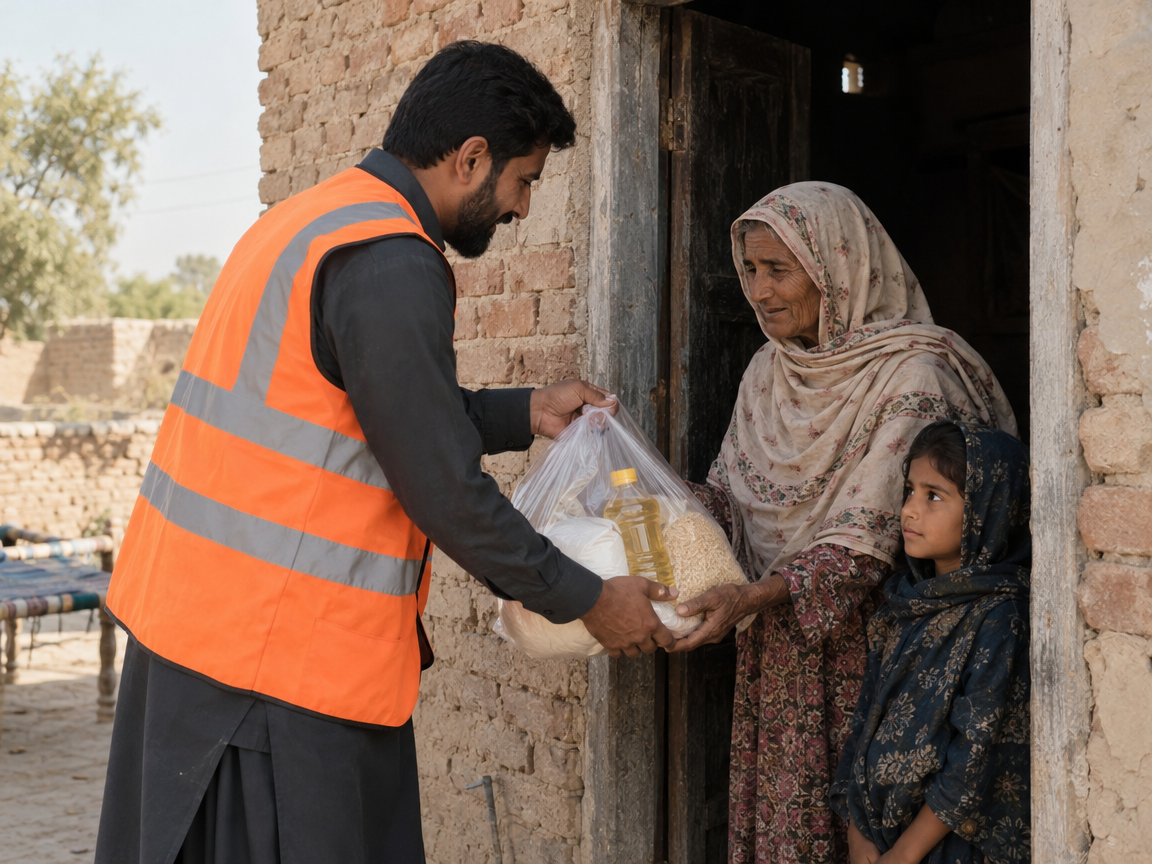
Ramadan appeals commonly include food packs for families, usually made up of staples chosen to suit the local diet. When you give for a food pack, it is worth asking a few questions:
- Which country and area will the packs go to?
- What does each pack contain, and how long should it last a family?
- Will the packs be distributed during Ramadan, or before Eid?
- Can I give zakat for food packs, or is it sadaqah only?
Feeding families all year round
Hunger does not end with Ramadan. Our article on feeding the hungry in Islam explains the reward of feeding others throughout the year.
At Sadaqah Welfare Trust, a Birmingham charity (registered charity number 1201413), we run Project Rizq-e-Rehmat: on the 25th of every month we provide food rations to over 100 struggling families in Jhang, Punjab, Pakistan. Supporting a monthly ration is one way to carry the generosity of Ramadan into the rest of the year. If you have questions about how rations are distributed, or about our zakat policy, please contact our team.
A simple Ramadan giving checklist
Before and during the month, run through these steps:
- Confirm your zakat date and calculate what you owe.
- Pay zakat ul-Fitr for yourself and each dependant before the Eid prayer.
- If you cannot fast and cannot make up the fasts, pay fidya for each fast missed.
- If kaffarah applies to you, ask a scholar and pay it promptly.
- Check current rates with your chosen charity, because they change each year.
- Ask each charity about its zakat policy, and check its registration.
- Plan some sadaqah for after Ramadan too.
Final thoughts
Ramadan is a wonderful time to give, and it helps to know which kind of giving you are doing. Keep zakat, zakat ul-Fitr, fidya and kaffarah clear in your mind, check the current rates with your charity, and ask questions when you are unsure. May Allah accept your fasting and your giving.
If you would like to feed a family in Jhang this Ramadan and beyond, you can provide a monthly ration through Project Rizq-e-Rehmat below, or browse all of our projects.
Frequently asked questions
What is zakat ul-Fitr?
Zakat ul-Fitr, also called fitrana, is a small charity paid at the end of Ramadan by every Muslim with the means, for themselves and their dependants. It should be paid before the Eid prayer.
What is the difference between fidya and kaffarah?
Fidya is paid by someone who cannot fast and cannot make up the fasts, by feeding a person in need for each fast missed. Kaffarah is the expiation for deliberately breaking a Ramadan fast without a valid reason: fasting sixty consecutive days or, if unable, feeding sixty people in need.
How much is zakat ul-Fitr or fidya this year?
Rates are based on the cost of food and change from year to year. Check the current figure with the charity you are giving to.
Do I have to pay zakat in Ramadan?
No. Zakat is due once every lunar year on your own zakat date. Many people choose a date in Ramadan, but it is not required.
Leave a comment or ask a question
Comments are sent privately to our team. They are not displayed publicly, and we reply by email.
Related articles

Giving Guide
Best Time to Give Charity: Ramadan, Fridays, Dhul Hijjah and Every Day
Blessed times multiply reward, but the best time to give is often right now. A practical guide to Ramadan, Fridays, Dhul Hijjah and daily giving.
· 6 min read
Food & Rations
Feeding the Hungry in Islam: Monthly Rations and the Reward of Feeding Others
Feeding others is a cornerstone of Islamic generosity. Learn the reward, and see how a monthly ration reaches over 100 families in Jhang.
· 6 min read

Learn
Zakat Calculators Compared: What to Look For Before You Calculate
Two zakat calculators can give you two different answers. Here is what to check in any calculator so that you can trust the figure you pay.
· 6 min read