
Feeding the Hungry in Islam: Monthly Rations and the Reward of Feeding Others
By Sadaqah Welfare Trust · · 6 min read
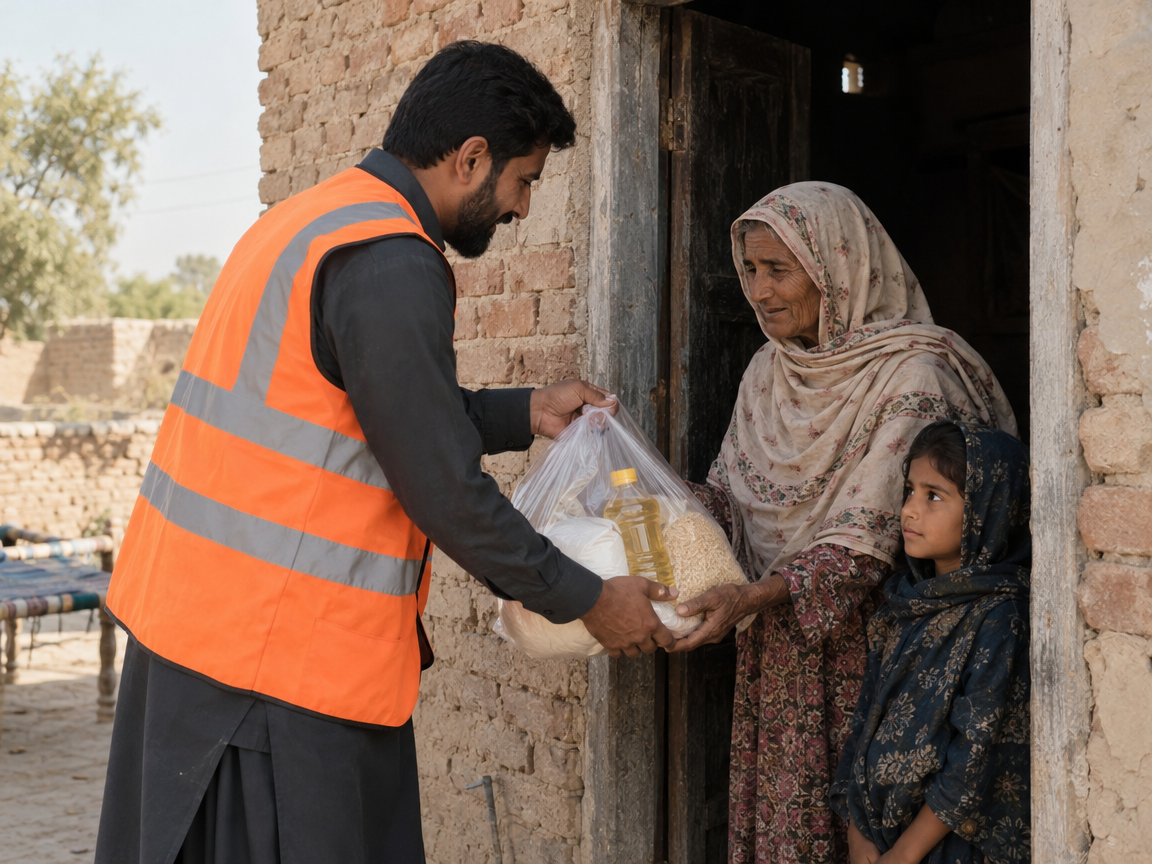
Feeding others is a cornerstone of Islamic generosity. Learn the reward, and see how a monthly ration reaches over 100 families in Jhang.
Feeding others: a mark of faith
Few acts of kindness are as immediate and as human as feeding a hungry person. Islam places great emphasis on it, repeatedly linking food and generosity with faith and good character. The Qur’an praises those who give food, despite their love for it, to the needy, the orphan and the captive (Qur’an 76:8).
The Prophet ﷺ made feeding others one of the first teachings he gave in Madinah. In a hadith recorded in Sunan Ibn Majah (3251), he said: “O people! Spread (the greeting of) Salam, feed others, uphold the ties of kinship, and pray during the night when people are sleeping, and you will enter Paradise with Salam.” It is a short sentence that connects kindness, community and worship in one breath.
Why food matters so much
Hunger is not only a physical experience. It affects health, concentration, energy and dignity. For a parent, having nothing to feed their children is a particular kind of pain. Feeding a family therefore does more than fill a stomach: it relieves worry, restores strength and lets people focus on the rest of their lives.
That is why many Muslims make feeding the hungry a regular part of their giving, not only at special times. A steady supply of food is often what makes the difference for families facing illness, widowhood, old age or loss of income.
Project Rizq-e-Rehmat
Rizq-e-Rehmat means provision and mercy, and that is exactly what our monthly ration project aims to be. Every month, on the 25th, Sadaqah Welfare Trust provides essential food rations to over 100 families in Jhang, Pakistan, including the sick, elderly, widows and orphans.
Many of these families face hunger, illness and hardship. Your support helps ensure they are nourished, cared for and never go hungry. We call it From UK to Jhang, because it connects donors here with families there in a very direct and human way.
What does £50 provide?
A monthly ration for one household costs £50. For that amount, a family receives essential food supplies that help them through the month. Because it is monthly, it can be a reliable source of support, not just a one-off relief.
Our team serves fi sabilillah, which allows us to keep operational costs minimal, so your donation reaches 100% of those in need. If you can, you might choose to sponsor a ration each month so that your giving becomes a regular habit. A small, consistent gift is often easier to sustain than occasional large ones.
The dignity of receiving help
Good charity protects the dignity of the person receiving it. A ration delivered on a predictable day each month lets a family plan, and spares them the stress of wondering where the next meal will come from. It tells them they have not been forgotten.
That is one reason we deliver on the same date every month. Reliability is itself a form of kindness, and for families who have faced illness, widowhood or old age, knowing that help is coming on the 25th can bring a real sense of relief.
For donors, the same reliability matters. When you give a ration regularly, you become part of that dependable rhythm, and your gift becomes a quiet, steady presence in a family’s month.
Ways to make feeding others part of your life
You do not have to wait for Ramadan to feed people, though it is a particularly rewarding time. Here are some ideas to make it a regular practice, wherever you are in the world:
- Give a monthly ration to a family in need
- Invite a neighbour, friend or someone alone to share a meal
- Prepare extra food and share it with those around you
- Support a local food bank in your own community
- Teach your children to share food and to give
Is a ration zakat or sadaqah?
It depends on your intention and on the eligibility of the recipients. Families who are poor and needy fall within the categories the Qur’an lists for zakat recipients (Qur’an 9:60), so many donors direct a portion of their zakat towards rations. Others give a ration as voluntary sadaqah.
If you wish to give zakat, tell the charity so that it can be handled correctly, and consult a qualified scholar if you have questions about your own situation. Our zakat guide and our comparison of sadaqah, zakat and lillah may help.
Feeding the hungry and ongoing reward
Food is consumed, so scholars do not usually describe it as sadaqah jariyah in the strict sense. Yet a commitment to feeding families regularly, month after month, is a form of steady, ongoing good. It keeps your giving active and your intention renewed, and families receive support they can rely on.
Some donors combine different kinds of giving: a hand pump for lasting water, a ration each month for daily needs and orphan sponsorship for a child’s future. Together they build a rounded picture of generosity. You can read more in our article on sadaqah jariyah ideas.
Give a ration today
If you would like to feed a family, you can give a monthly ration for £50 through our fixed donation, or choose any amount using the flexible box on our donation page. Whether you are in the UK, the USA, Canada, Australia, the UAE or elsewhere, you can give securely online.
In the words of the hadith, feed others, and you will enter Paradise with Salam. May Allah accept your giving and make it a means of mercy for you and the families you help.
Frequently asked questions
When are rations distributed?
Sadaqah Welfare Trust distributes rations every month on the 25th to over 100 families in Jhang, Pakistan.
How much is a monthly ration?
A monthly ration for one household costs £50.
Who receives the rations?
Rations go to struggling families, including the sick, elderly, widows and orphans.
Leave a comment or ask a question
Comments are sent privately to our team. They are not displayed publicly, and we reply by email.
Related articles
Learn
Sadaqah vs Zakat vs Lillah: What’s the Difference?
Zakat, sadaqah and lillah are all ways of giving for Allah, but they are not the same. Here is a clear, practical comparison for donors.
· 6 min read

Orphan Support
Sponsoring an Orphan in Islam: Virtues and How Sponsorship Works
The Prophet ﷺ promised closeness to those who care for orphans. Learn what the virtue means and how sponsorship can change a child’s future.
· 6 min read

Giving Guide
Best Time to Give Charity: Ramadan, Fridays, Dhul Hijjah and Every Day
Blessed times multiply reward, but the best time to give is often right now. A practical guide to Ramadan, Fridays, Dhul Hijjah and daily giving.
· 6 min read