
Zakat Explained: Who Must Pay, Nisab and How to Calculate
By Sadaqah Welfare Trust · · 7 min read

Zakat is the third pillar of Islam. This guide walks through who must pay, how nisab works, what to include and how to calculate it with confidence.
What is zakat?
Zakat is one of the five pillars of Islam and an obligatory form of charity. The word carries the meanings of purification and growth: giving zakat purifies the wealth that remains and purifies the heart of the giver from greed. The Qur’an repeatedly pairs it with prayer, for example in the command to establish prayer and give zakat (Qur’an 2:43).
Unlike sadaqah, which is voluntary and open to everyone, zakat is a fixed duty on every Muslim who meets certain conditions. It is not a favour from the rich to the poor; the Qur’an treats it as the right of those in need over a portion of the wealth Allah has entrusted to us.
This guide gives a general overview of how zakat works. Because personal finances vary so much, please treat it as an introduction and speak to a qualified scholar about your own situation.
Who must pay zakat?
In general, zakat is due from a Muslim who is an adult of sound mind and who owns wealth above a minimum threshold, called the nisab, which has been held for a full lunar year. The one-year period is known as the hawl.
The key conditions can be summarised simply. You must be Muslim, you must own wealth that is above the nisab after meeting your basic needs and certain debts, and that wealth must have been in your possession for one lunar year. If your wealth drops below the nisab during the year, scholars differ on the details, which is another reason to seek personal guidance.
- Being a Muslim adult with sound mind
- Owning zakatable wealth at or above the nisab
- Holding that wealth for a full lunar year (hawl)
- Having wealth that is free from immediate essential needs and debts
Understanding the nisab
The nisab is the minimum amount of wealth that makes zakat due. Traditionally it is defined by weights of gold and silver. Many scholars cite roughly 87.48 grams of gold or 612.36 grams of silver, though you may see slightly different figures depending on the source and school of thought.
Because the cash value of gold and silver changes daily, we do not quote a currency figure in this article. Please check the current gold and silver nisab values from a reputable source at the time you calculate your zakat, and ask your local scholar or mosque which standard they recommend. Many contemporary scholars suggest using the silver standard because it results in a lower threshold, so that more people in need benefit, but this is a matter on which you should seek advice.
The same applies wherever you live. Whether you are paying zakat in pounds, dollars, Canadian or Australian dollars, or dirhams, you need to convert the gold or silver weight into your own currency using today’s market price.
What counts as zakatable wealth?
Zakat is generally due on wealth that is held or grows. The most commonly discussed categories are listed below, but the rulings for some items, such as pensions, property and shares, can be complex and are best checked with a scholar.
- Cash in hand and money in bank accounts
- Gold and silver, including jewellery in many scholarly opinions
- Business stock and trade goods held for sale
- Investments and shares held to trade or for profit
- Money owed to you that you expect to be repaid
- Rental property income that has been saved
How to calculate zakat
The standard rate is 2.5% of your total zakatable wealth, which is one-fortieth. The method is straightforward once you gather your figures.
Start by choosing a date, many people use the same date each year or the first day of Ramadan, and total up your zakatable assets on that day. Subtract any short-term debts that are due immediately. If what remains is at or above the nisab, multiply it by 0.025 to find your zakat. For example, if your zakatable wealth after debts were 10,000 in your currency, your zakat would be 250.
To save time, you can use our free zakat calculator, which uses live gold and silver prices and shows the nisab in your own currency. Keep a note of your calculation each year. If you are unsure about a particular asset or debt, ask a qualified scholar rather than guessing. It is better to pay a little extra, treating it as sadaqah, than to fall short of what is due.
Who can receive zakat?
Zakat is not for any cause we like; the Qur’an defines its recipients in Surah At-Tawbah (Qur’an 9:60): the poor, the needy, those employed to collect it, those whose hearts are to be reconciled, those in bondage, those in debt, in the cause of Allah, and the stranded traveller.
This is why it matters to give zakat through an organisation that understands and follows these rules. Zakat should reach eligible people, and it should be given with the intention of fulfilling your obligation. If you are not sure whether a particular project is zakat-eligible, ask the charity directly and, where needed, ask a scholar.
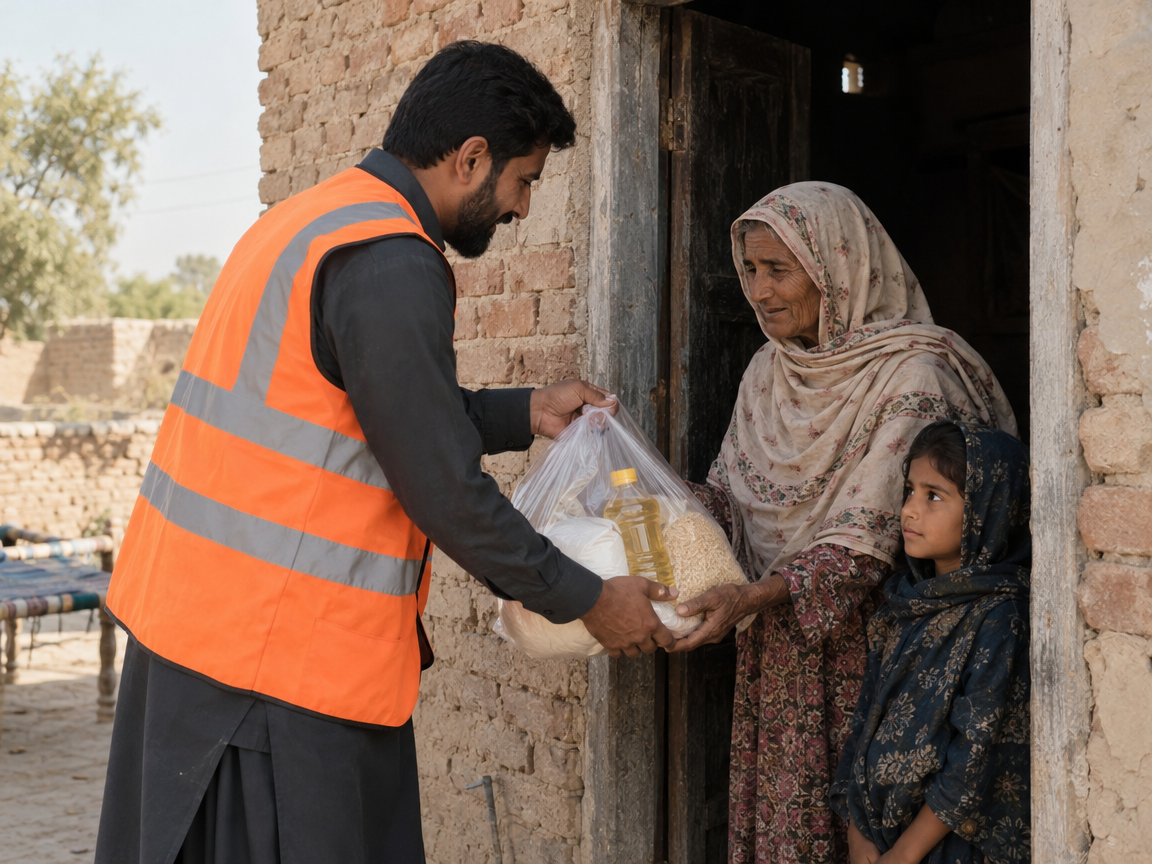
At Sadaqah Welfare Trust we encourage donors to ask us how their gift will be used. Our team works with families in Jhang, Pakistan, and our donation policy is that your donation reaches 100% of those in need. If you wish to give zakat, please tell us your intention when you contact us through our contact page.
When should you pay?
Zakat becomes due once the hawl is complete, and scholars encourage paying it promptly rather than delaying without a good reason. Many Muslims choose to pay in Ramadan because rewards are multiplied in that month, but zakat is not restricted to Ramadan. What matters is that you pay on time and that you pay what is due.
Some people prefer to pay in instalments across the year to make it easier to manage. Whether this is acceptable depends on the circumstances, so if this applies to you, ask a scholar for guidance.
Common mistakes to avoid
A few errors come up again and again. Forgetting to include savings in secondary accounts, ignoring gold and silver kept at home, giving zakat to causes that are not eligible, and delaying payment are among the most common. Another is confusing zakat with sadaqah: voluntary gifts do not automatically discharge your zakat unless you intended them as zakat.
When in doubt, ask. A qualified scholar can answer personal questions about your assets and debts far better than any online article, including this one.
Give your zakat with confidence
Zakat is a trust and a purification. By understanding the basics, calculating carefully and giving to those who qualify, you honour one of Islam’s core pillars and bring real relief to families who need it.
To learn how your gift can help, explore our projects, read about sadaqah, zakat and lillah, or use the amount box on our donation page. May Allah accept your zakat and purify your wealth.
Frequently asked questions
What percentage of wealth is paid as zakat?
The standard rate on zakatable wealth is 2.5%, or one-fortieth. Different rules can apply to certain assets such as agricultural produce or livestock, so ask a scholar if that applies to you.
Can I pay zakat to a charity overseas?
Many scholars permit it, as long as the recipients are eligible. Donors in the UK, USA, Canada and Australia often give to families in other countries. Please ask the charity how zakat is handled and consult a scholar for your own case.
How do I find the current nisab value?
Check the present market price of gold or silver from a reputable source, multiply it by the nisab weight, and confirm with your local scholar which standard to follow.
Leave a comment or ask a question
Comments are sent privately to our team. They are not displayed publicly, and we reply by email.
Related articles
Learn
Sadaqah vs Zakat vs Lillah: What’s the Difference?
Zakat, sadaqah and lillah are all ways of giving for Allah, but they are not the same. Here is a clear, practical comparison for donors.
· 6 min read

Learn
What Is Sadaqah? Meaning, Types and Rewards in Islam
Sadaqah is far more than money. Discover what it means, the many forms it takes, and why even the smallest act of giving carries great reward.
· 6 min read

Giving Guide
Best Time to Give Charity: Ramadan, Fridays, Dhul Hijjah and Every Day
Blessed times multiply reward, but the best time to give is often right now. A practical guide to Ramadan, Fridays, Dhul Hijjah and daily giving.
· 6 min read