
What Is Sadaqah? Meaning, Types and Rewards in Islam
By Sadaqah Welfare Trust · · 6 min read

Sadaqah is far more than money. Discover what it means, the many forms it takes, and why even the smallest act of giving carries great reward.
The meaning of sadaqah
The word sadaqah comes from the Arabic root s-d-q, which carries the idea of truthfulness and sincerity. In everyday Muslim life, sadaqah means voluntary charity: anything given freely, for the sake of Allah, without it being a fixed obligation. Unlike zakat, which is a defined duty on those who meet certain conditions, sadaqah is open to everyone, at any time, in any amount.
That openness is part of its beauty. A student with a few pounds in their pocket, a family in Birmingham on a tight budget, a professional in Toronto or Sydney with a comfortable salary: all of them can give sadaqah, and all of them can earn its reward. What matters most is the intention behind the gift, not the size of it.
In the Qur’an, Allah describes the righteous as those who give wealth, despite their love for it, to relatives, orphans, the needy, travellers and those who ask (Qur’an 2:177). Sadaqah is simply that spirit put into practice.
Sadaqah is not only about money
Many people assume sadaqah is purely financial, but the Prophet ﷺ taught that kindness in all its forms counts. A smile, a gentle word, helping someone carry a heavy load, removing something harmful from the road: scholars have long pointed to these as sadaqah because they benefit other people and are done for Allah’s sake.
This matters because it removes any excuse. Nobody is ever too poor to give sadaqah. If you cannot give money this month, you can still give your time, your skills, your patience or your good character. Giving in these ways trains the heart to be generous, which in turn makes financial giving easier when you are able.
- Giving money to a trusted charity or directly to someone in need
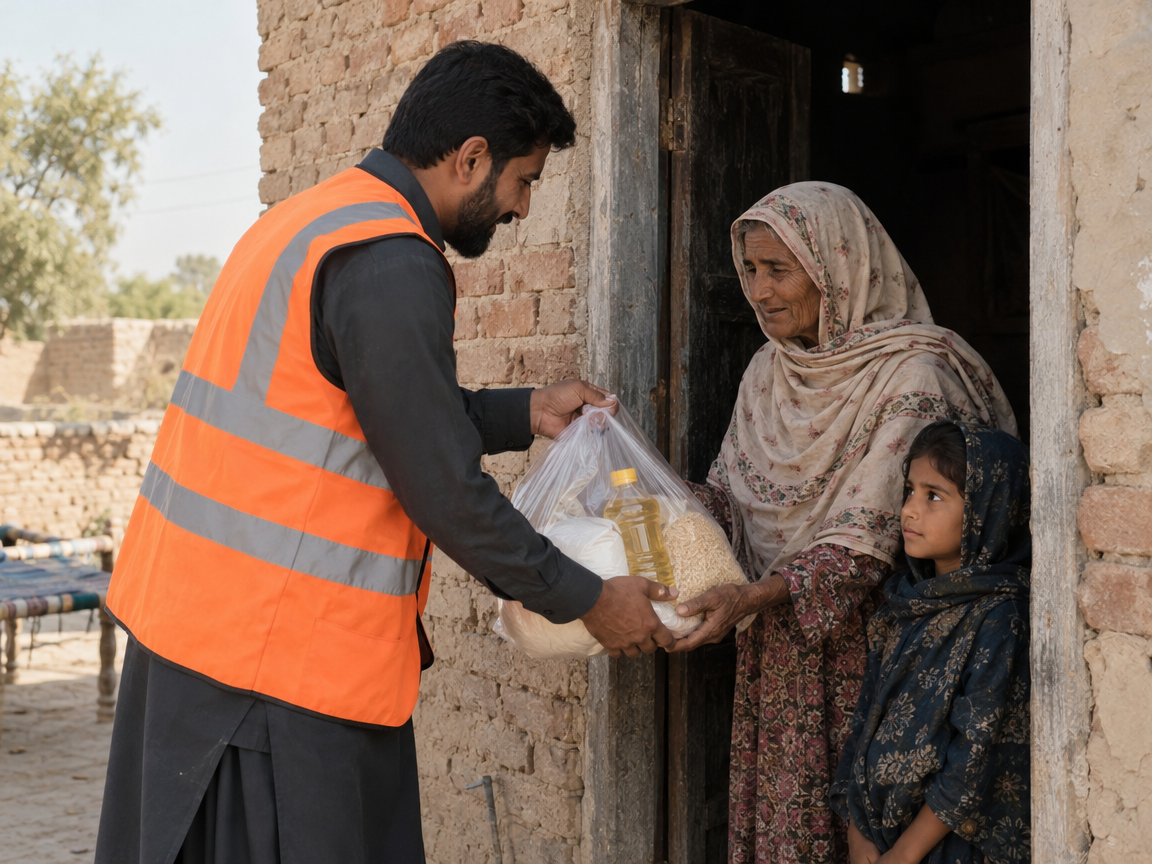
- Feeding a hungry person or sharing your meal
- Offering your time, for example visiting the sick or helping an elderly neighbour
- Teaching someone something beneficial
- Speaking kindly and smiling at others
The main types of sadaqah
Scholars and charities often group sadaqah into a few broad types, which helps donors decide how they want to give. Understanding the differences can make your giving more intentional.
First, there is one-off sadaqah: a single gift made at a moment of your choosing, such as helping a family with food this week. Second, there is regular sadaqah, a small amount given daily, weekly or monthly. Many people find that a modest, consistent gift is easier to sustain than occasional large ones, and the Prophet ﷺ is reported to have said that the most beloved deeds to Allah are the most consistent, even if small.
Third, there is sadaqah jariyah, often translated as ongoing or continuous charity. This is a gift whose benefit keeps flowing, such as a water well, a hand pump or support for a mosque. You can read more in our guide to sadaqah jariyah ideas. Finally, there is charity given with non-material means, which we touched on above.
The rewards promised for giving
The Qur’an uses a beautiful image to describe how Allah multiplies what we give: the example of those who spend their wealth in the way of Allah is like a grain that grows seven ears, each bearing a hundred grains, and Allah multiplies for whom He wills (Qur’an 2:261). It is a reminder that what looks small in this world can grow enormously in the next.
The Prophet ﷺ also taught that charity does not decrease wealth (Sahih Muslim 2588). In practice, many people notice that giving brings its own kind of barakah, a sense of blessing and sufficiency that is hard to put into numbers. Whatever your experience, the principle is clear: you lose nothing in Allah’s sight by giving for His sake.
Sadaqah is also described by scholars as a means of protection and purification: it can help soften the heart, express gratitude for blessings, and be a source of shade for the believer on the Day of Judgement. These are reasons to make giving a habit rather than a rare event.
Who deserves your sadaqah?
Because sadaqah is voluntary, it is not restricted to the eight categories of zakat recipients, although those categories are an excellent guide. You can give to relatives, neighbours, orphans, widows, the sick, students, and communities facing hardship. The Qur’an specifically highlights feeding the needy, the orphan and the captive out of love for Allah (Qur’an 76:8).
Many donors in the UK, USA, Canada and Australia choose to support families overseas, where each pound can stretch a long way and the need is often greater. Whether you give locally or abroad, the key is to choose a cause you trust and to give with sincerity.
How to choose a trustworthy charity
Giving through an organisation is a practical way to reach people you could never meet yourself, but it is worth being thoughtful. Look for a charity that is open about who it is, where it works and what it does with your gift. Check that it has a registered charity number and, if you are in the UK, you can search the relevant charity register for yourself.
Sadaqah Welfare Trust is a UK charity (registered charity number 1201413) based in Birmingham. Our team serves fi sabilillah, which allows us to keep running costs minimal, so your donation reaches 100% of those in need. We work with families in Jhang, in Pakistan’s Punjab region, delivering clean water, monthly food rations, clothing, orphan support and emergency relief.
Ask questions, read about the projects, and give where you feel confident your gift will be used well. A good charity will welcome that.
Simple ways to start giving sadaqah today
You do not need to wait for Ramadan or a special occasion. If you would like to turn this article into action, here are a few straightforward ideas, all of which you can start this week.
- Set a small regular amount aside, for example a few pounds each Friday, and give it consistently.
- Fund a hand pump for £100 so a family and their neighbours have clean drinking water for years.
- Provide a monthly ration for a household for £50, helping a family put food on the table.
- Sponsor an orphan for £220 per year and help give a child a brighter future.
- Give any amount you choose using our flexible donation box, whether that is £5 or £500.
Final thoughts
Sadaqah is one of the simplest and most accessible acts of worship in Islam. It asks only for sincerity, and it opens the door to reward that can continue long after the gift is given. Start small, stay consistent and choose causes that touch lives in a lasting way.
If you would like to give sadaqah today, you can use the amount box on our donation page, explore our projects, or read about the differences between sadaqah, zakat and lillah. May Allah accept it from you.
Frequently asked questions
Is sadaqah compulsory?
No. Sadaqah is voluntary charity. Zakat is the obligatory form of giving for those who meet the conditions; sadaqah is additional and open to everyone.
Is there a minimum amount for sadaqah?
There is no minimum. Even a small gift or a kind word counts as sadaqah when it is given sincerely for the sake of Allah.
Can I give sadaqah on behalf of someone else?
Many scholars say it is permissible and beneficial to give sadaqah on behalf of a relative who has passed away, with the intention that the reward reaches them. For personal circumstances, consult a qualified scholar.
Leave a comment or ask a question
Comments are sent privately to our team. They are not displayed publicly, and we reply by email.
Related articles
Learn
Sadaqah vs Zakat vs Lillah: What’s the Difference?
Zakat, sadaqah and lillah are all ways of giving for Allah, but they are not the same. Here is a clear, practical comparison for donors.
· 6 min read

Sadaqah Jariyah
Sadaqah Jariyah Ideas: Ongoing Charity That Keeps Giving
Ongoing charity is a gift whose reward keeps flowing. Here are practical, meaningful sadaqah jariyah ideas you can start today.
· 6 min read

Giving Guide
Best Time to Give Charity: Ramadan, Fridays, Dhul Hijjah and Every Day
Blessed times multiply reward, but the best time to give is often right now. A practical guide to Ramadan, Fridays, Dhul Hijjah and daily giving.
· 6 min read