
Where Can You Give Zakat in the UK? Eligible Recipients and Questions to Ask
By Sadaqah Welfare Trust · · 6 min read

Zakat has clear rules about who may receive it. Here are the eight categories named in the Qur’an, the ways UK Muslims pay, and what to ask a charity first.
Zakat has rules about who receives it
Sadaqah can be given to almost anyone in need, but zakat is different. It is one of the five pillars of Islam, and the Qur’an names the people who may receive it. So when you pay zakat, the question is not only how much you owe but also where it goes.
This guide explains the eight categories of zakat recipients, the main ways UK Muslims pay, and the questions to ask any charity before you give it your zakat. If you have not yet worked out what you owe, our zakat calculator and our guide to comparing zakat calculators will help.
The eight categories in Qur’an 9:60
Allah says that zakat is for the poor, the needy, those employed to administer it, those whose hearts are to be reconciled, freeing those in bondage, those in debt, in the cause of Allah, and the stranded traveller (Qur’an 9:60). Scholars explain each category in detail; in simple terms:
- The poor (al-fuqara): people who have little or nothing to meet their basic needs.
- The needy (al-masakin): people who have some means, but not enough to live on.
- Zakat administrators: those who collect and distribute zakat.
- Those whose hearts are to be reconciled: traditionally, people new to Islam or whose support benefits the community.
- Freeing those in bondage: historically, freeing slaves and captives.
- Those in debt: people who cannot repay debts taken on for lawful needs.
- In the cause of Allah (fi sabilillah): understood in different ways by scholars.
- The stranded traveller (ibn al-sabil): someone far from home without the means to return.
Where scholars differ
Scholars agree on the eight categories but differ on some details, especially the scope of “in the cause of Allah” and how much a charity may use from the administrators’ share. This is one of the main reasons to ask a charity how it applies the categories, rather than assuming every charity follows the same approach.
Ways to pay zakat in the UK
There is no single correct way to pay. Many people use more than one of the options below.
Directly to people you know
You can give zakat directly to an eligible person, such as a neighbour in hardship or a relative who is not one of your dependants. Scholars generally say you cannot give zakat to those you are already obliged to support, such as your parents, children or spouse. Giving directly can be very personal, but take care to protect the dignity of the person receiving it.
Through a local mosque or zakat committee
Many mosques collect and distribute zakat locally. Ask how they identify recipients, how they keep zakat separate from general funds, and when the money is distributed.
Through a charity
Many UK Muslim charities run zakat programmes. National Zakat Foundation, Islamic Relief UK, Muslim Hands and Human Appeal are examples of UK charities with zakat programmes. Human Appeal, for instance, states that its orphan sponsorship is zakat-eligible. We mention them for information only; Sadaqah Welfare Trust has no connection with them, and each charity sets its own zakat policy.
Questions to ask before giving zakat to a charity
Policies differ, so ask the charity directly. A trustworthy charity will be happy to answer.
- Do you keep zakat separate from other donations?
- Which categories of recipient does your zakat go to, and how do you check eligibility?
- Do you use any of my zakat for running costs, and on what basis?
- Which of your projects do you accept zakat for, and which are for sadaqah only?
- Do you distribute zakat promptly, or hold some of it for later?
- Who advises you on zakat questions?
Keep a record
Write down the answers you receive, or keep the charity’s emails, along with a note of how much zakat you gave, to whom and when. It helps you check that your full zakat has been paid, and if a charity’s policy changes in future years, you will have a record of what you were told when you gave.
Zakat, sadaqah and lillah are not interchangeable
Charities often ask for different kinds of giving for different projects. Some charities fund projects such as building a masjid from lillah or sadaqah rather than zakat, depending on the scholarly view they follow. Whether a specific project can receive zakat is for the charity and its scholars to explain.
If a charity cannot answer your zakat questions clearly, you can give your zakat elsewhere and still support that charity with sadaqah. Our article on the differences between sadaqah, zakat and lillah explains these terms.
Asking us about zakat
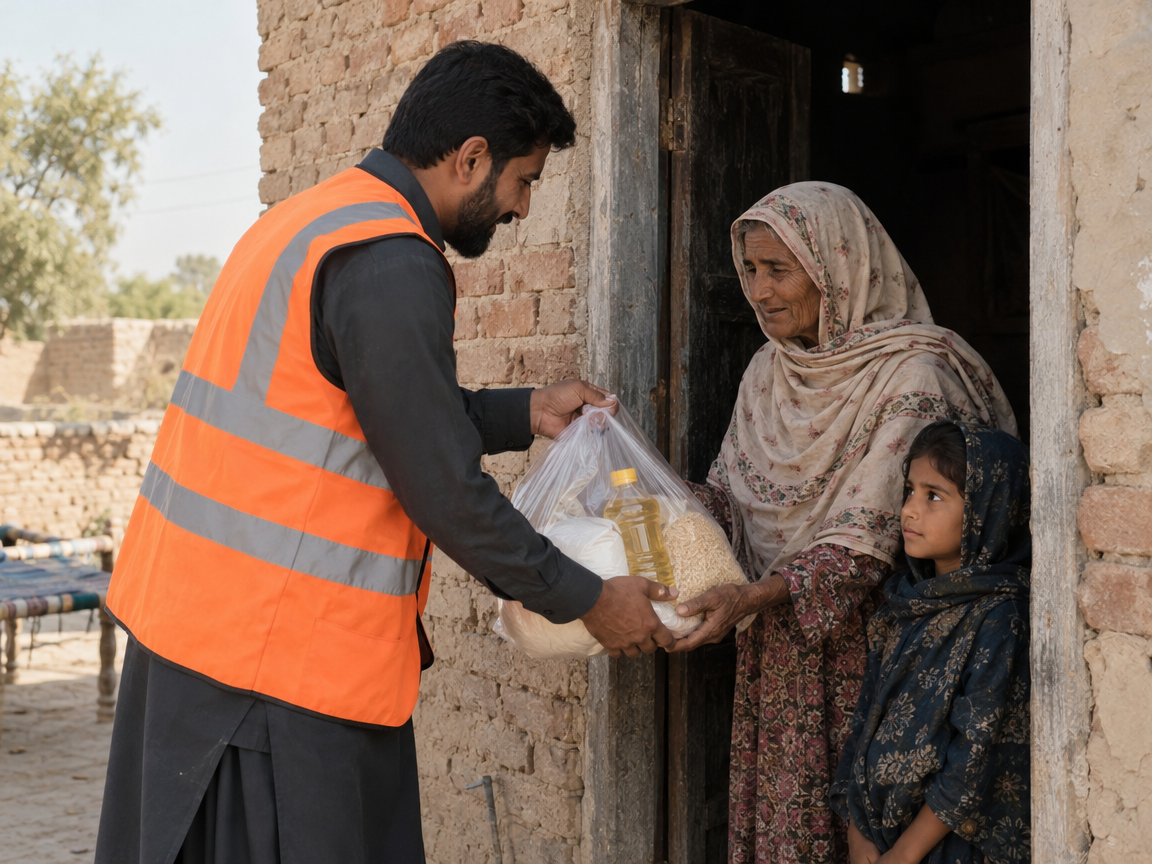
Sadaqah Welfare Trust is a Birmingham charity, registered charity number 1201413, working with families in Jhang, Punjab, Pakistan. Our work includes food rations on the 25th of every month for over 100 families, orphan sponsorship at £220 a year, more than 760 hand pumps installed, clothing collections and the construction of a masjid. You can read about each one on our projects page.
If you are thinking of giving your zakat to us, please contact our team first and ask about our zakat policy, so that you can decide with full information. We would encourage you to ask every charity the same questions.
Final thoughts
Zakat is an act of worship with clear rules about who receives it. Work out what you owe, decide whether to give directly, through a mosque or through a charity, and ask the questions above before you hand it over. That way your zakat reaches the people it is meant for.
If you would like to give sadaqah to families in Jhang as well, you can choose any amount in our donation box.
Frequently asked questions
Who can receive zakat?
The Qur’an (9:60) names eight categories: the poor, the needy, zakat administrators, those whose hearts are to be reconciled, freeing those in bondage, those in debt, in the cause of Allah, and the stranded traveller.
Can I give zakat to my family?
Scholars generally say you cannot give zakat to those you are already obliged to support, such as parents, children or a spouse, but other relatives in need may be eligible. Ask a scholar about your own situation.
How do I know if a charity uses zakat correctly?
Ask the charity directly how it keeps zakat separate, which recipients it serves and how it checks eligibility. A trustworthy charity will explain its zakat policy clearly.
Can I give my zakat to Sadaqah Welfare Trust?
Please contact us and ask about our zakat policy before giving zakat, so that you can make an informed decision.
Leave a comment or ask a question
Comments are sent privately to our team. They are not displayed publicly, and we reply by email.
Related articles

Learn
Zakat Explained: Who Must Pay, Nisab and How to Calculate
Zakat is the third pillar of Islam. This guide walks through who must pay, how nisab works, what to include and how to calculate it with confidence.
· 7 min read

Learn
Zakat Calculators Compared: What to Look For Before You Calculate
Two zakat calculators can give you two different answers. Here is what to check in any calculator so that you can trust the figure you pay.
· 6 min read
Learn
Sadaqah vs Zakat vs Lillah: What’s the Difference?
Zakat, sadaqah and lillah are all ways of giving for Allah, but they are not the same. Here is a clear, practical comparison for donors.
· 6 min read